


 Call Mon–Fri 8:00 AM–6:30 PM · Sat 9:00 AM–2:00 PM





For most Ohio yards, vinyl and aluminum hold up best against the state’s brutal freeze-thaw cycles and summer humidity, while wood still wins on looks if you stay on top of upkeep. The single best fence for Ohio depends on your goal, but here is the short version. Pick vinyl when you want privacy and almost no maintenance. Pick aluminum when you want a clean look around a pool or sloped yard that will not rust. Pick wood when warmth and curb appeal matter more than easy care. Pick a chain link when you need an affordable, sturdy boundary for pets or a back property line. Ohio winters expand and contract the ground constantly, so posts set below the frost line matter more than the material you choose. Professional fence services can help ensure proper installation. Get that part right, and any of these four can last for years here in Columbus and across central Ohio.
What Does Ohio Weather Actually Do to a Fence?
Ohio weather attacks a fence from two directions: water and movement. The freeze-thaw cycle is the big one. Ground moisture freezes, swells, and pushes on posts, then thaws and settles. Over a winter that can happen dozens of times, and it slowly heaves posts out of line if they were not set deep enough. That is why frost-line depth, usually around 32 to 36 inches in this part of the state, determines whether your fence stays straight.
Then comes humidity and rain. Long humid summers and wet springs feed rot in untreated wood and grow mildew on any surface that stays damp. Add wind across open suburban lots, heavy wet snow loads, and the freeze cracking of waterlogged materials, and you can see why a fence that thrives in a dry climate may struggle here.
It also helps to picture how the seasons stack up over a single year. Spring brings saturated clay soil that holds water against post bases for weeks. Summer swings between humid stretches and dry spells, so wood absorbs moisture and then dries, which is what drives warping and cupping. Fall drops leaves and debris that trap dampness along the bottom rail. Then winter arrives and freezes whatever water is soaked in during the other three seasons. A fence in central Ohio has to survive all four of those phases in a row, every single year, which is a tougher test than a milder climate ever asks of one.
So when people compare fence types that Ohio homeowners actually need, the real question is not just looks or price. It is how each material handles standing water, repeated freezing, and ground that never sits still. Keep that filter in mind as we go through the four main options.
Wood Fences: Classic Looks at a Real Cost
Wood is still the most popular choice for warmth and a natural look, but it asks the most from you in return. A cedar or pressure-treated pine fence gives you that timeless backyard feel and works beautifully for a tall privacy fence. It is also one of the easier materials to repair board by board, which matters after a rough Ohio winter.
The trade-off is upkeep. To survive our humidity and freeze-thaw swings, wood needs sealing or staining every two to three years. Skip that, and water soaks in, freezes, and splits the grain, while the bottoms of posts and pickets start to rot where they meet damp soil. Boards can also warp and cup as they dry out each summer.
It is worth knowing the difference between the two common woods, since they age differently here. Cedar resists rot and insects naturally, holds its shape well, and weathers to a soft gray if you let it. It costs more per board but rewards you with a longer life and better looks. Pressure-treated pine is cheaper and very strong, but it tends to twist and check as it dries, so it benefits from a season of drying before you stain it. Either way, the bottom two inches of every picket and the buried portion of every post are where Ohio wood fences fail first, so good gravel drainage at the post base buys you years.
Pros:
- Best natural appearance and curb appeal
- Strong privacy when built tall and tight
- Easy to repair or replace single boards
- Lower upfront price than vinyl in most cases
Cons:
- Needs staining or sealing every few years
- Prone to rot, warping, and insect damage in humid stretches
- Shorter lifespan than vinyl or aluminum if neglected
Wood makes sense if you love the look and do not mind a weekend of staining now and then. If that sounds like a chore you will skip, read the next section first.
Is Vinyl Fence Worth It in Ohio?
Yes, vinyl is one of the best values in Ohio because it shrugs off the exact conditions that wear out wood. A quality vinyl fence does not rot, does not need staining, and does not feed mildew the way damp wood does. Rinse it with a hose once or twice a year, and it looks new. For a low-maintenance privacy fence, it is hard to beat.
Vinyl also handles freeze-thaw well because it does not absorb water the way wood does, so there is no internal moisture to freeze and crack. Modern vinyl is formulated to stay flexible in cold, though very cheap panels can get brittle in a deep freeze, which is why material quality matters. Properly installed posts set below the frost line keep the whole run stable through winter.
One thing buyers overlook is the gap between grades of vinyl. Thicker wall panels with internal aluminum or steel post inserts behave very differently in a January cold snap than the thin hollow panels sold at the lowest price point. The good stuff carries a UV inhibitor that keeps it from yellowing in the sun and enough impact resistance to take a soccer ball or a falling branch without cracking. When you compare quotes, ask about wall thickness and post reinforcement, not just height and color, because that is where the long-term durability actually lives.
Pros:
- Almost no maintenance, just an occasional rinse
- Will not rot, warp, or need staining
- Long lifespan that often outlasts wood
- Solid panels give excellent privacy
Cons:
- Higher upfront fence installation cost than wood or chain link
- Cheaper grades can crack in extreme cold
- Color choices are more limited, and you cannot stain it later
If you want to compare panel styles, our vinyl fence options page breaks down the privacy and semi-private layouts that work well in central Ohio yards. Many homeowners land on vinyl once they add up years of skipped staining.
When Do Aluminum and Chain Link Make the Most Sense?
Aluminum and chain link each win in specific situations rather than being all-purpose picks. Aluminum is the answer when you want an elegant metal look that will never rust. Chain link is the answer when you want a sturdy, budget-friendly boundary, and privacy is not the goal.
Aluminum: looks like iron, lasts like aluminum
Aluminum fencing gives you the ornamental, wrought-iron style without the rust that plagues real iron in a wet climate. Because it does not corrode, it is a smart pick around pools, on sloped yards where panels can rack to follow the grade, and for front yards where you want to see through to the landscaping. It is strong, light, and needs almost no maintenance.
The catch is that aluminum is not a privacy material. The pickets are spaced, so it marks a boundary and look sharp, but they will not block sightlines. It also costs more than chain link. Many homeowners with a pool choose aluminum specifically because it can meet the spacing and height rules in safety codes while still looking open and tidy. You can see typical styles on our aluminum fence page.
Aluminum pros and cons:
- Pros: rust-proof, low maintenance, great for pools and slopes, refined look
- Cons: no privacy, higher cost than chain link, dents under hard impact
Chain link: the value workhorse
Chain link is the most affordable common option, and it takes Ohio winters in stride. Galvanized mesh resists rust, the open weave never holds wind or snow load the way a solid panel does, and it is tough enough for dogs, kids, and back property lines. For securing a yard for pets or fencing a large area on a budget, it is hard to beat the price.
What you give up is appearance and privacy, though slats and vinyl coatings in black or green soften the look and help it blend into the yard. A black vinyl-coated mesh in particular almost disappears against a tree line, which is why it has become the default for homeowners who want containment without a stark silver fence dominating the view. Our chain link fence covers coating and height options.
Chain link pros and cons:
- Pros: lowest cost, very durable, low maintenance, good for pets and large areas
- Cons: minimal privacy, plainer look, can bend if something heavy leans on it
How Do You Match the Fence to Your Goal?
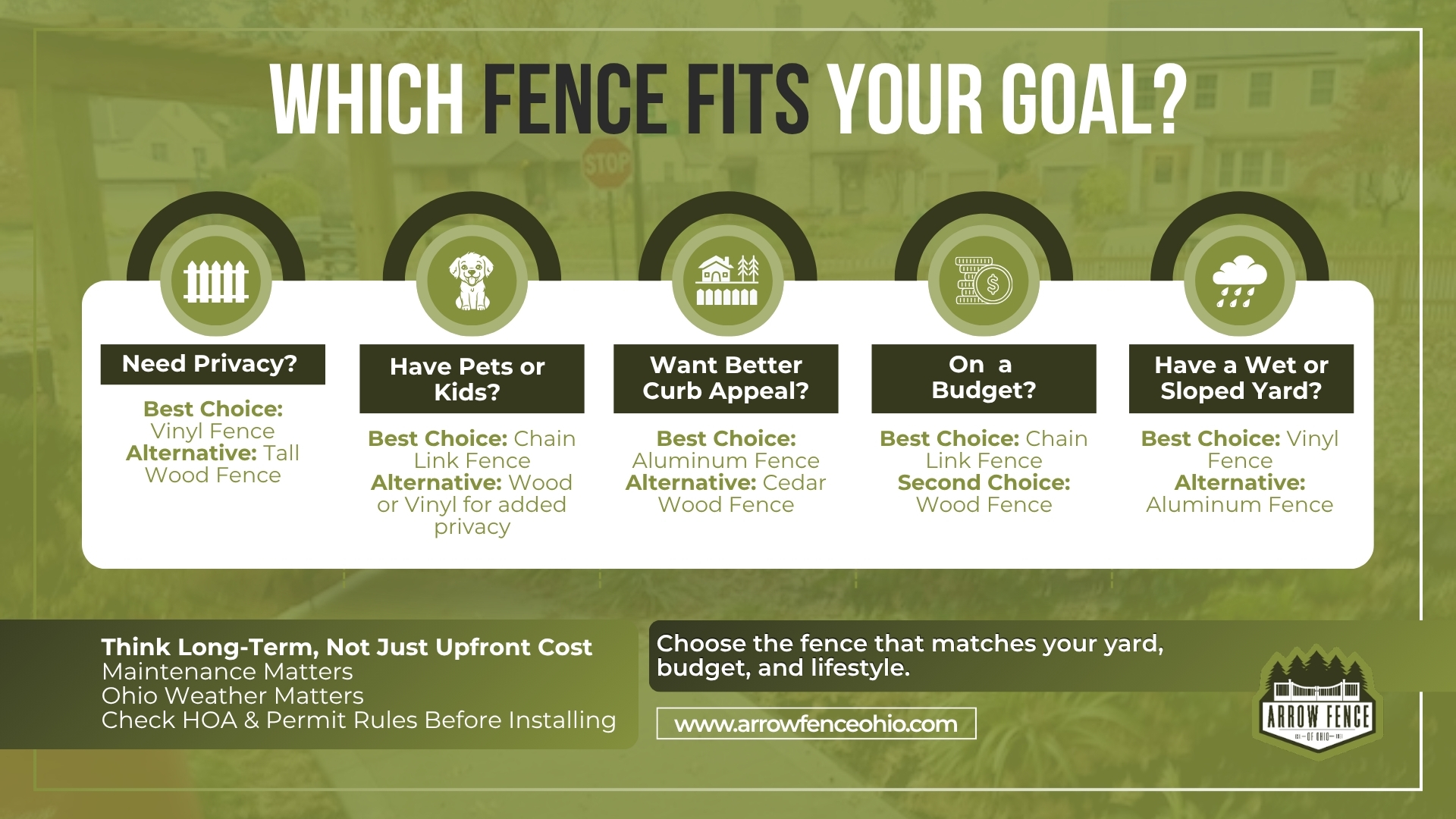
Start with why you want the fence, because your goal points straight to the material. Privacy, pets, looks, and budget each push you toward a different winner, and being honest about your top priority saves you money and second-guessing.
- Want privacy? Go vinyl for low upkeep or tall wood for the classic look and lower upfront price. Both block sightlines when built solid and tall. Our privacy fence options show how the two compare side by side.
- Have pets or kids? Chain link is the value champ for containment, while wood and vinyl add privacy on top of safety. Match the height to how high your dog can jump.
- Care most about looks? Aluminum for a refined front yard or pool, cedar wood for warm backyard charm.
- On a tight budget? Chain link first, then wood. Vinyl and aluminum cost more upfront but pay you back in saved maintenance over the years.
- Have a sloped or wet yard? Aluminum racks to follow grade, and vinyl resists the moisture that rots wood at low spots.
Also, weigh the long game, not just the sticker. A cheaper material that needs staining or replacing sooner can cost more across ten Ohio winters than a pricier one you install once. Think of it as the total cost over the life of the fence. A wood fence might run less today, but factor in a stain job every couple of years plus a board swap here and there, and the gap with vinyl narrows fast. If a higher upfront number is the only thing stopping you, financing can spread it out, and we lay out the details on our fence financing page.
It also pays to check your local rules before you buy. Many central Ohio neighborhoods and HOAs have height limits, setback requirements, and approved-material lists, and some require a permit for anything over a set height. Pool barriers carry their own safety code on top of that. Sorting out those details up front keeps you from buying the wrong fence twice.
A Quick Side-by-Side for Central Ohio Yards
Here is the honest summary for our climate:
| Material | Look | Price | Upkeep | Privacy |
| Wood | Best, natural | Mid | High | Good |
| Vinyl | Clean, uniform | Higher | Almost none | Top |
| Aluminum | Refined, ornamental | Higher | Low | None |
| Chain link | Plain | Lowest | Low | None |
No single material is right for every yard. The best fence for Ohio is the one that matches your goal, your maintenance tolerance, and your budget, set on posts deep enough to ride out the freeze-thaw season without leaning. Two neighbors on the same street can make two different right choices, and both can be correct for their own priorities.
Ready to Pick the Right Fence for your Yard?
If you want a straight answer on which material fits your goal, your slope, and your budget, we are happy to walk the yard with you and price it out. As a Columbus fence company that installs all four of these materials across central Ohio, we set every post below the frost line so it holds through winter. You can see our full process and request an estimate over at Arrow Fence of Ohio, and we will help you weigh the pros and cons for your exact lot.
